I have the email addresses of dead people. For some reason, I’m reluctant to delete them. They were not really friends, in the classic sense, but they were people in my life and now they are gone. So why is it so hard to check the “delete” box and get them out of my email address list?
The Mail-daemon (a whole ‘nother subject) will only send me a terse notice that a message was undeliverable, so I never send them anything. If I did, where would it go? Do email messages fly off into the infinite reaches of space? Do any of them actually make it to Heaven?
“Delete” is an ugly word when you apply it to a human life. Even if that life is no longer here. “Delete” has implications that can never apply to the life of a human being. Every life makes an impact somewhere. No life can be deleted, as if it never existed.
Maybe I cannot delete them because these people left their footprints in my life. Maybe it is because the act is so harsh, and makes their deaths so final. Maybe it is because I have a difficult time throwing things away if I think I may need them again someday…


All Hallows Eve
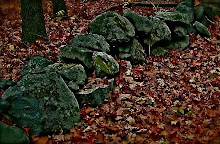
All Hallows Eve,
and a lean wind sweeps
the last withered leaves
from the street,
leaves them heaped by weathered walls--
against this gray stone wall.
There is no treat,
only trick of light
and cold gray stone
and I am alone
when the Lost Ones come,
tiny wisps in the night
singing their songs of joy.
I never heard them laugh
or cry--
never said goodbye,
only gripped the empty place
that cradled them,
screaming “Why?”,
and kept on walking,
kept on,
one foot,
then the next,
till the years were spent
and I found this place
among the stones,
crumbling withered leaves in my hand.
All Hallows Eve
and the cringing light
of the dying year
shudders in a chilling wind
and every trace of green and fire
is swallowed up in murky doubt
when I sit alone
among these stones
and the Lost Ones come,
tiny wisps in the night,
singing their songs of joy.
I wrote this poem for my babies who died before they were born. Most of them died in the fall...a sad season.
and a lean wind sweeps
the last withered leaves
from the street,
leaves them heaped by weathered walls--
against this gray stone wall.
There is no treat,
only trick of light
and cold gray stone
and I am alone
when the Lost Ones come,
tiny wisps in the night
singing their songs of joy.
I never heard them laugh
or cry--
never said goodbye,
only gripped the empty place
that cradled them,
screaming “Why?”,
and kept on walking,
kept on,
one foot,
then the next,
till the years were spent
and I found this place
among the stones,
crumbling withered leaves in my hand.
All Hallows Eve
and the cringing light
of the dying year
shudders in a chilling wind
and every trace of green and fire
is swallowed up in murky doubt
when I sit alone
among these stones
and the Lost Ones come,
tiny wisps in the night,
singing their songs of joy.
I wrote this poem for my babies who died before they were born. Most of them died in the fall...a sad season.


Cell Rebellion
Boobs. Tits. Jugs. The twins. The girls. Whatever you call them, breasts are breasts. Symbols of the feminine gender, they nourish infants and attract guys. Poets write about them; artists paint them. Women are supposed to have two of them. Sometimes it doesn’t end up that way.
I have one and a half. I was “lucky” and didn’t need a mastectomy when the little cluster of calcifications that “nine times out of ten is nothing” turned out to be cancer. Never well endowed, in my case a lumpectomy took out a lot of real estate.
After ten years, the half-boob still hurts; a constant reminder that life is short and days are too precious to waste. The doctor told me the pain is from the radiation, and should go away eventually. Ten years is a long eventually. Ten years is also a gift—many women don’t get ten years after surgery for breast cancer.
With a diagnosis of cancer, there comes a flood of questions. The most perplexing circle like vultures around the word “why?” Why does a woman who eats broccoli, takes vitamins, nurses her babies, and has no family history of breast cancer get breast cancer? Was it the abortion I had at nineteen? Was it the time I used heavy-duty paint stripper on the kitchen windows? Was it the stress of years living in a difficult marriage? Who knows?
What is it that triggers a cell to take on a demented life of its own? Matt Ridley, in Genome has a good description of the cascade of events within a cell that impel it to rebellion. Such a tiny thing, a cell, a net of chromosomes, a scrap of a spiral of DNA—you could die from that one tiny thing.
Cancer is strange. You go along with your life, feeling fine, and all the time there is this tiny thing growing inside you that carries your death. And you have no clue. I was too busy with children and life to take time out for a mammogram. When I finally made an appointment for the big squeeze, the last thing I expected was a call from the doctor suggesting a biopsy was in order. And what the heck did a biopsy involve, anyway?
It turns out there are two kinds of biopsies. One consists of lying on your stomach on a table with your breast hanging out through a hole so the doctor can stick a needle into it, remove some of the suspicious tissue, and send it off to the lab for the inquisition. So I got all ready, up to the point of assuming the position, only to be told that I didn’t have the required minimum size for the procedure. (Insult to injury!)
No, I had to have the other kind. The kind where they put you to sleep and take out a chunk, which seems a little odd to me because my total boobal endowment was just a chunk to begin with. When I heard the word “biopsy,” I always assumed it was just a little smidgeon of tissue that gets removed—not so. But the doctor was reassuring, thought for sure it wasn’t cancer, said he’d call me when the results were in.
So a week later the phone rings. It’s the doctor. I have three different kinds of cancer going on in my breast. I have a 30% chance of getting it in the other one. Oh crap.
I didn’t fall apart. Didn’t cry. Just went through the grim setting of one foot in front of the next and then doing it again, and again, step by step. The surgeon. The oncologist. The second opinion at Mass General. The CAT scan. The bone scan. The science fiction horror of sterile walls and fluorescent lights and plastic and steel, the giant machines in this factory of life and death where there is no living thing to be seen, and the dead are hidden away.
I had a lumpectomy (there’s a word for you) and weeks of radiation. Were all the errant cells destroyed? How does one know for sure? A cell is so small—what if one got away, slipped into a capillary and headed on down the river to God knows where, to pick up where it left off? That is the sword of Damocles that hangs over the head of every survivor of cancer treatment: what if one got away? You wouldn’t know. You wouldn’t know until the symptoms started to take over, and from what I understand, once that happens your chances go way down...
I have one and a half. I was “lucky” and didn’t need a mastectomy when the little cluster of calcifications that “nine times out of ten is nothing” turned out to be cancer. Never well endowed, in my case a lumpectomy took out a lot of real estate.
After ten years, the half-boob still hurts; a constant reminder that life is short and days are too precious to waste. The doctor told me the pain is from the radiation, and should go away eventually. Ten years is a long eventually. Ten years is also a gift—many women don’t get ten years after surgery for breast cancer.
With a diagnosis of cancer, there comes a flood of questions. The most perplexing circle like vultures around the word “why?” Why does a woman who eats broccoli, takes vitamins, nurses her babies, and has no family history of breast cancer get breast cancer? Was it the abortion I had at nineteen? Was it the time I used heavy-duty paint stripper on the kitchen windows? Was it the stress of years living in a difficult marriage? Who knows?
What is it that triggers a cell to take on a demented life of its own? Matt Ridley, in Genome has a good description of the cascade of events within a cell that impel it to rebellion. Such a tiny thing, a cell, a net of chromosomes, a scrap of a spiral of DNA—you could die from that one tiny thing.
Cancer is strange. You go along with your life, feeling fine, and all the time there is this tiny thing growing inside you that carries your death. And you have no clue. I was too busy with children and life to take time out for a mammogram. When I finally made an appointment for the big squeeze, the last thing I expected was a call from the doctor suggesting a biopsy was in order. And what the heck did a biopsy involve, anyway?
It turns out there are two kinds of biopsies. One consists of lying on your stomach on a table with your breast hanging out through a hole so the doctor can stick a needle into it, remove some of the suspicious tissue, and send it off to the lab for the inquisition. So I got all ready, up to the point of assuming the position, only to be told that I didn’t have the required minimum size for the procedure. (Insult to injury!)
No, I had to have the other kind. The kind where they put you to sleep and take out a chunk, which seems a little odd to me because my total boobal endowment was just a chunk to begin with. When I heard the word “biopsy,” I always assumed it was just a little smidgeon of tissue that gets removed—not so. But the doctor was reassuring, thought for sure it wasn’t cancer, said he’d call me when the results were in.
So a week later the phone rings. It’s the doctor. I have three different kinds of cancer going on in my breast. I have a 30% chance of getting it in the other one. Oh crap.
I didn’t fall apart. Didn’t cry. Just went through the grim setting of one foot in front of the next and then doing it again, and again, step by step. The surgeon. The oncologist. The second opinion at Mass General. The CAT scan. The bone scan. The science fiction horror of sterile walls and fluorescent lights and plastic and steel, the giant machines in this factory of life and death where there is no living thing to be seen, and the dead are hidden away.
I had a lumpectomy (there’s a word for you) and weeks of radiation. Were all the errant cells destroyed? How does one know for sure? A cell is so small—what if one got away, slipped into a capillary and headed on down the river to God knows where, to pick up where it left off? That is the sword of Damocles that hangs over the head of every survivor of cancer treatment: what if one got away? You wouldn’t know. You wouldn’t know until the symptoms started to take over, and from what I understand, once that happens your chances go way down...
An Unwilling Cancer Student
After my surgery, I read everything I could find about breast cancer. So many books, so many articles, so many studies, trying to find out what happened and what I could do to keep it from happening again. There is so much conflicting advice in this age of information.
I Google the survival statistics, even knowing that for one individual, percentages don’t matter. You either get it again, or you don’t. All or nothing. One hundred percent or zero. And ultimately, does it matter? We are all guaranteed one visit from the Grim Reaper regardless of what we do.
What about mammograms? Do they cause cancer themselves? Some suggest so. Others swear that early detection far outweighs any risk.
Does diet make a difference? Some studies suggest so, while others seem to indicate not. Vitamins? Herbs? Green tea? Antioxidants? I use them all; take the shotgun approach.
Is cancer a failure of the immune system? Some say yes; others say no. Eat meat—don’t eat meat. Eat soy—don’t eat soy.
The geographical distribution of breast cancer is telling. Low in Africa and Asia; high in the US, Canada, Europe and Australia. Something about modern, high-tech countries is correlated with breast cancer—what is it?
Is it even possible to cut off a cancer recurrence before it starts? Some consistent factors seem to run through all the varying opinions. A diet high in raw, fresh fruits and vegetables apparently gives some protection—some of the sources I found suggested that the intact enzymes in raw foods are beneficial to the body. Eating raw fruits and vegetables is easy enough to do, and can’t hurt you even if it doesn’t work—which you wouldn’t know until the cancer grew big enough to take you down.
Vitamin D, melatonin, and selenium are associated with a lower incidence of cancer. The latest studies imply that vitamin E supplements are ineffective in preventing cancer.
I am groping in the dark, trying to find answers to something that, in the end, may have no answers. The pieces of the puzzle don’t fit together. And what good is it to have a few pieces, if you can’t see the whole thing?
Here is a list of my favorite websites for breast cancer information:
The Center for Disease Control. Has a lot of interesting statistics and general information.
The National Cancer Institute. Many articles, statistics, etc.
The Dr. Susan Love Research Foundation. Author of The Breast Book and medical authority on breast cancer. Much information about breast cancer, recurrence, survivor stories.
Susan G. Komen Organization. Covers every aspect of breast cancer.
Breast Cancer.Org. A wealth of information, open to alternative treatments as well.
Dr. Lorraine Day’s Official Website. Dr. Day overcame her own breast cancer using natural therapies.
Alternative Cancer Treatments Comparison and Testing. The best website I have found if you are looking into alternatives to conventional medical treatments.
PawPawResearch. Interesting information about the inhibiting effects of pawpaw on cancer cells.
I Google the survival statistics, even knowing that for one individual, percentages don’t matter. You either get it again, or you don’t. All or nothing. One hundred percent or zero. And ultimately, does it matter? We are all guaranteed one visit from the Grim Reaper regardless of what we do.
What about mammograms? Do they cause cancer themselves? Some suggest so. Others swear that early detection far outweighs any risk.
Does diet make a difference? Some studies suggest so, while others seem to indicate not. Vitamins? Herbs? Green tea? Antioxidants? I use them all; take the shotgun approach.
Is cancer a failure of the immune system? Some say yes; others say no. Eat meat—don’t eat meat. Eat soy—don’t eat soy.
The geographical distribution of breast cancer is telling. Low in Africa and Asia; high in the US, Canada, Europe and Australia. Something about modern, high-tech countries is correlated with breast cancer—what is it?
Is it even possible to cut off a cancer recurrence before it starts? Some consistent factors seem to run through all the varying opinions. A diet high in raw, fresh fruits and vegetables apparently gives some protection—some of the sources I found suggested that the intact enzymes in raw foods are beneficial to the body. Eating raw fruits and vegetables is easy enough to do, and can’t hurt you even if it doesn’t work—which you wouldn’t know until the cancer grew big enough to take you down.
Vitamin D, melatonin, and selenium are associated with a lower incidence of cancer. The latest studies imply that vitamin E supplements are ineffective in preventing cancer.
I am groping in the dark, trying to find answers to something that, in the end, may have no answers. The pieces of the puzzle don’t fit together. And what good is it to have a few pieces, if you can’t see the whole thing?
Here is a list of my favorite websites for breast cancer information:
The Center for Disease Control. Has a lot of interesting statistics and general information.
The National Cancer Institute. Many articles, statistics, etc.
The Dr. Susan Love Research Foundation. Author of The Breast Book and medical authority on breast cancer. Much information about breast cancer, recurrence, survivor stories.
Susan G. Komen Organization. Covers every aspect of breast cancer.
Breast Cancer.Org. A wealth of information, open to alternative treatments as well.
Dr. Lorraine Day’s Official Website. Dr. Day overcame her own breast cancer using natural therapies.
Alternative Cancer Treatments Comparison and Testing. The best website I have found if you are looking into alternatives to conventional medical treatments.
PawPawResearch. Interesting information about the inhibiting effects of pawpaw on cancer cells.
Where, O Death, Is Thy Sting?
A yellow jacket stung me last summer. I was mowing near a ground nest, careful not to get too close. But she snuck around behind and nailed me good.
It hurt. Just like all the other times I’ve been stung. And just like all the other times, I stopped mowing, went in the house to rub baking soda into the stings, bathed my toe in cold water, and went outside to finish mowing the lawn…
At first I thought I was just imagining that I didn’t feel right, kind of lightheaded and a little sick to my stomach. I kept mowing. Then my ears began to ring, I could feel my heart pounding, and darkness began to close in around the edges of my vision. Suddenly, I made the connection: this was an allergic reaction to the sting. I don’t DO allergies, I thought. How could this be happening?
I staggered into the house, calling for my husband to take me to the ER. He ran upstairs to look for some Benadryl, and I collapsed on the couch, fighting the darkness, talking fast while I still could, “It’s too late, call 911! Call 911!” As he spoke on the phone, it occurred to me that it would be easier for the EMTs if I got as close to the door as possible. So I rolled off the couch and dragged myself halfway down the front hall, and then I couldn’t move anymore.
The wood floor felt cool on my face. Lying there, I could hear my husband’s voice, and then the voice of a woman who was putting a blood pressure cuff on my arm. I focused on my one job—breathing. Air in…air out… it was a lot of effort. I heard the woman say she couldn’t get a reading.
The EMTs arrived. (Air in…air out…) A stinky oxygen mask covered my face, and they lifted me onto a stretcher. On the way down the front steps, there was a lurch—were they going to drop the stretcher? Then into the ambulance. An IV, some epinephrine and I don’t know what else…I heard someone say my blood pressure was 60 over 30, and thought whoa, that is low.
But I was not afraid.
There had been a moment, while I lay on the front hall floor, when I realized this might be the end. And in that moment I crossed some kind of line from anxiety to peace. I remember saying, “It’s OK if I die,” so my husband would not be afraid. Lying in the ambulance there was no fear; instead, I looked forward to Heaven. In my heart I kept saying, over and over, “I love you, Jesus, I love you. Thank you so much for the life you gave me.” And I knew it was all right to leave, that God had used me to bring good things into other people’s lives. And I was going to see Him really soon.
Well, the medications worked, and I’m still here. But there was a strange comfort in that experience, learning that when death finally does come, it will be OK. I am certain that God will be there with me at the end.
There is also a lesson here, and a warning. I have never had a reaction to a sting beyond the expected pain and local swelling. They hurt, but in the context of life they have always fallen into the annoyance category. The last thing I ever expected was a yellow jacket sending me into anaphylactic shock.
So, if you are ever stung, I highly recommend staying near a telephone for at least a half hour, until you are sure that the danger of shock has passed. It happens without warning, and it happens fast.
It hurt. Just like all the other times I’ve been stung. And just like all the other times, I stopped mowing, went in the house to rub baking soda into the stings, bathed my toe in cold water, and went outside to finish mowing the lawn…
At first I thought I was just imagining that I didn’t feel right, kind of lightheaded and a little sick to my stomach. I kept mowing. Then my ears began to ring, I could feel my heart pounding, and darkness began to close in around the edges of my vision. Suddenly, I made the connection: this was an allergic reaction to the sting. I don’t DO allergies, I thought. How could this be happening?
I staggered into the house, calling for my husband to take me to the ER. He ran upstairs to look for some Benadryl, and I collapsed on the couch, fighting the darkness, talking fast while I still could, “It’s too late, call 911! Call 911!” As he spoke on the phone, it occurred to me that it would be easier for the EMTs if I got as close to the door as possible. So I rolled off the couch and dragged myself halfway down the front hall, and then I couldn’t move anymore.
The wood floor felt cool on my face. Lying there, I could hear my husband’s voice, and then the voice of a woman who was putting a blood pressure cuff on my arm. I focused on my one job—breathing. Air in…air out… it was a lot of effort. I heard the woman say she couldn’t get a reading.
The EMTs arrived. (Air in…air out…) A stinky oxygen mask covered my face, and they lifted me onto a stretcher. On the way down the front steps, there was a lurch—were they going to drop the stretcher? Then into the ambulance. An IV, some epinephrine and I don’t know what else…I heard someone say my blood pressure was 60 over 30, and thought whoa, that is low.
But I was not afraid.
There had been a moment, while I lay on the front hall floor, when I realized this might be the end. And in that moment I crossed some kind of line from anxiety to peace. I remember saying, “It’s OK if I die,” so my husband would not be afraid. Lying in the ambulance there was no fear; instead, I looked forward to Heaven. In my heart I kept saying, over and over, “I love you, Jesus, I love you. Thank you so much for the life you gave me.” And I knew it was all right to leave, that God had used me to bring good things into other people’s lives. And I was going to see Him really soon.
Well, the medications worked, and I’m still here. But there was a strange comfort in that experience, learning that when death finally does come, it will be OK. I am certain that God will be there with me at the end.
There is also a lesson here, and a warning. I have never had a reaction to a sting beyond the expected pain and local swelling. They hurt, but in the context of life they have always fallen into the annoyance category. The last thing I ever expected was a yellow jacket sending me into anaphylactic shock.
So, if you are ever stung, I highly recommend staying near a telephone for at least a half hour, until you are sure that the danger of shock has passed. It happens without warning, and it happens fast.
All Diets Lead to Death
When my youngest daughter was eleven, she designed an experiment on the effects of nutrition for a science fair. I took her to the pet shop—her favorite place on earth—and bought four baby mice from a single litter, two males and two females. She put a pair into each of two cages. Both cages were alike: clean bedding, toys, a hiding place, a bottle for fresh water, and an exercise wheel. The only environmental difference between the two pairs of mice was their diet.
One pair lived in junk-food heaven. They eagerly grabbed at the chips and cookies that made up the largest part of their diet, and relished occasional treats of sweetened cereal.
The other pair enjoyed their daily offerings of nuts, fruit, vegetables and whole grains.
Sarah weighed them every day, and measured their growth (I have forgotten those statistics now), and they became quite tame.
The experiment took on a darker edge when the two females gave birth. The well-nourished mother had a large litter of strong little pups, who all remained healthy to weaning. The junk food mama gave birth to a large litter as well—and promptly devoured all but two of her babies. Of course, you can’t draw a conclusion from such a small sample, but we couldn’t help thinking that the junk food mama’s deficient diet had something to do with her ravenous appetite for fresh meat.
Sarah designed a maze to test their problem-solving ability and memory. Here again, the sample is way too small to draw a conclusion, but it was kind of interesting. The well-nourished mice figured out the maze more quickly than their junk food counterparts, and subsequent tests bore that out as the well-fed mice ran quicker and quicker courses through the maze without making mistakes. The undernourished mice never quite “got it.”
It was a good experiment, and Sarah got an A in the science fair. But the most memorable thing about it, the thing that has stayed with me and put so much of life in perspective, was my daughter’s observation: “You know, Mom, when you think about it, all diets lead to death.”
One pair lived in junk-food heaven. They eagerly grabbed at the chips and cookies that made up the largest part of their diet, and relished occasional treats of sweetened cereal.
The other pair enjoyed their daily offerings of nuts, fruit, vegetables and whole grains.
Sarah weighed them every day, and measured their growth (I have forgotten those statistics now), and they became quite tame.
The experiment took on a darker edge when the two females gave birth. The well-nourished mother had a large litter of strong little pups, who all remained healthy to weaning. The junk food mama gave birth to a large litter as well—and promptly devoured all but two of her babies. Of course, you can’t draw a conclusion from such a small sample, but we couldn’t help thinking that the junk food mama’s deficient diet had something to do with her ravenous appetite for fresh meat.
Sarah designed a maze to test their problem-solving ability and memory. Here again, the sample is way too small to draw a conclusion, but it was kind of interesting. The well-nourished mice figured out the maze more quickly than their junk food counterparts, and subsequent tests bore that out as the well-fed mice ran quicker and quicker courses through the maze without making mistakes. The undernourished mice never quite “got it.”
It was a good experiment, and Sarah got an A in the science fair. But the most memorable thing about it, the thing that has stayed with me and put so much of life in perspective, was my daughter’s observation: “You know, Mom, when you think about it, all diets lead to death.”
Subscribe to:
Posts (Atom)